
Mac Pantoprazole
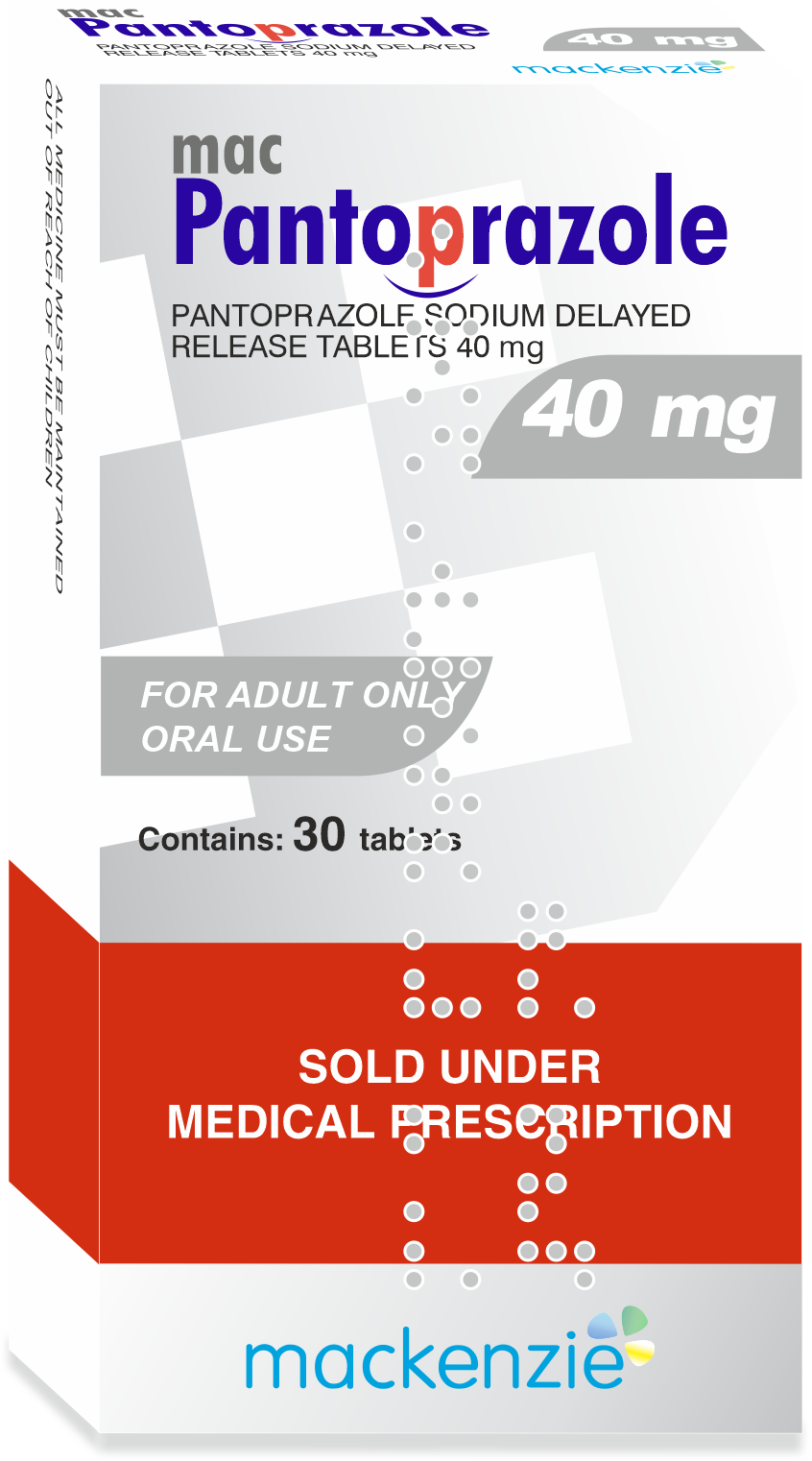
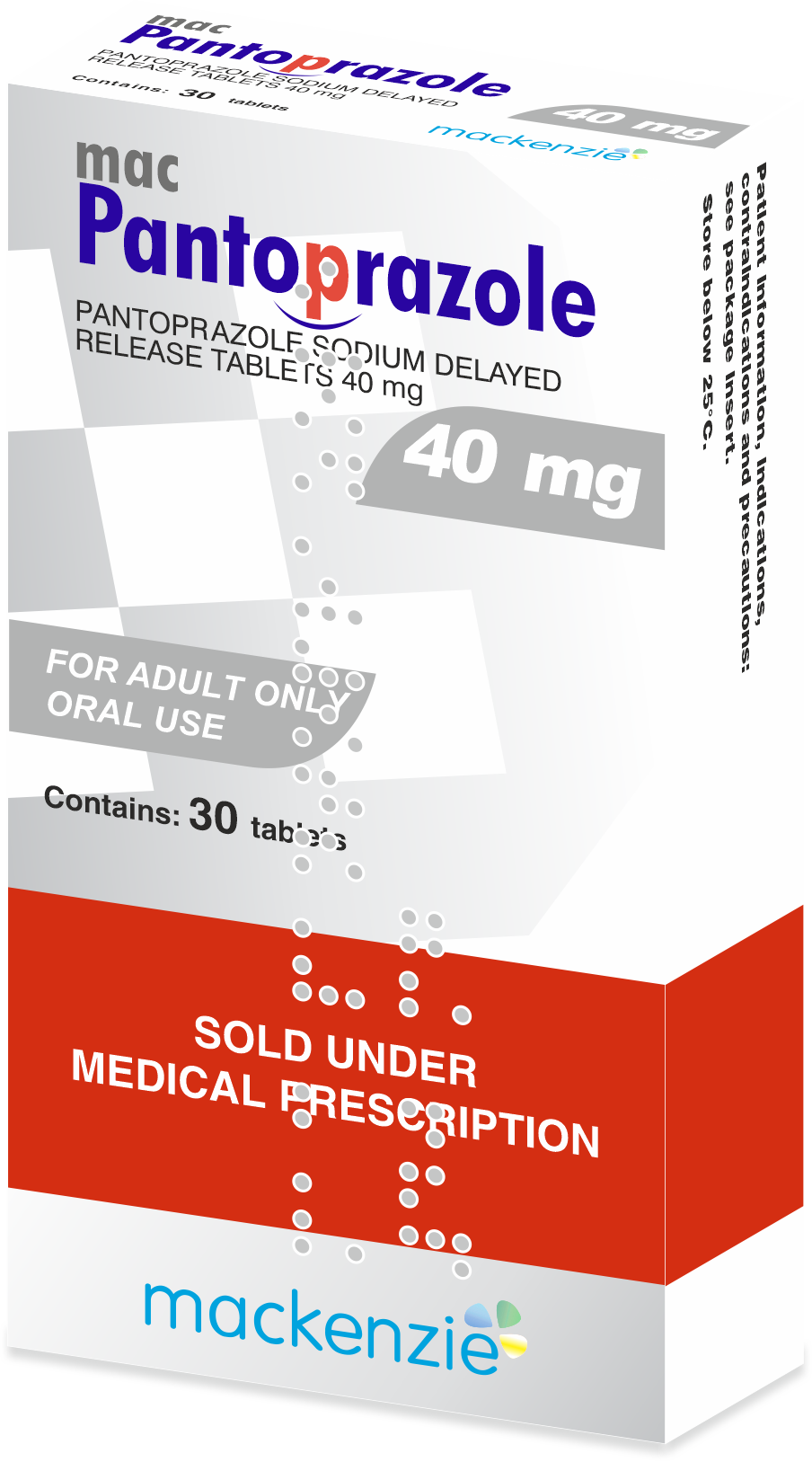
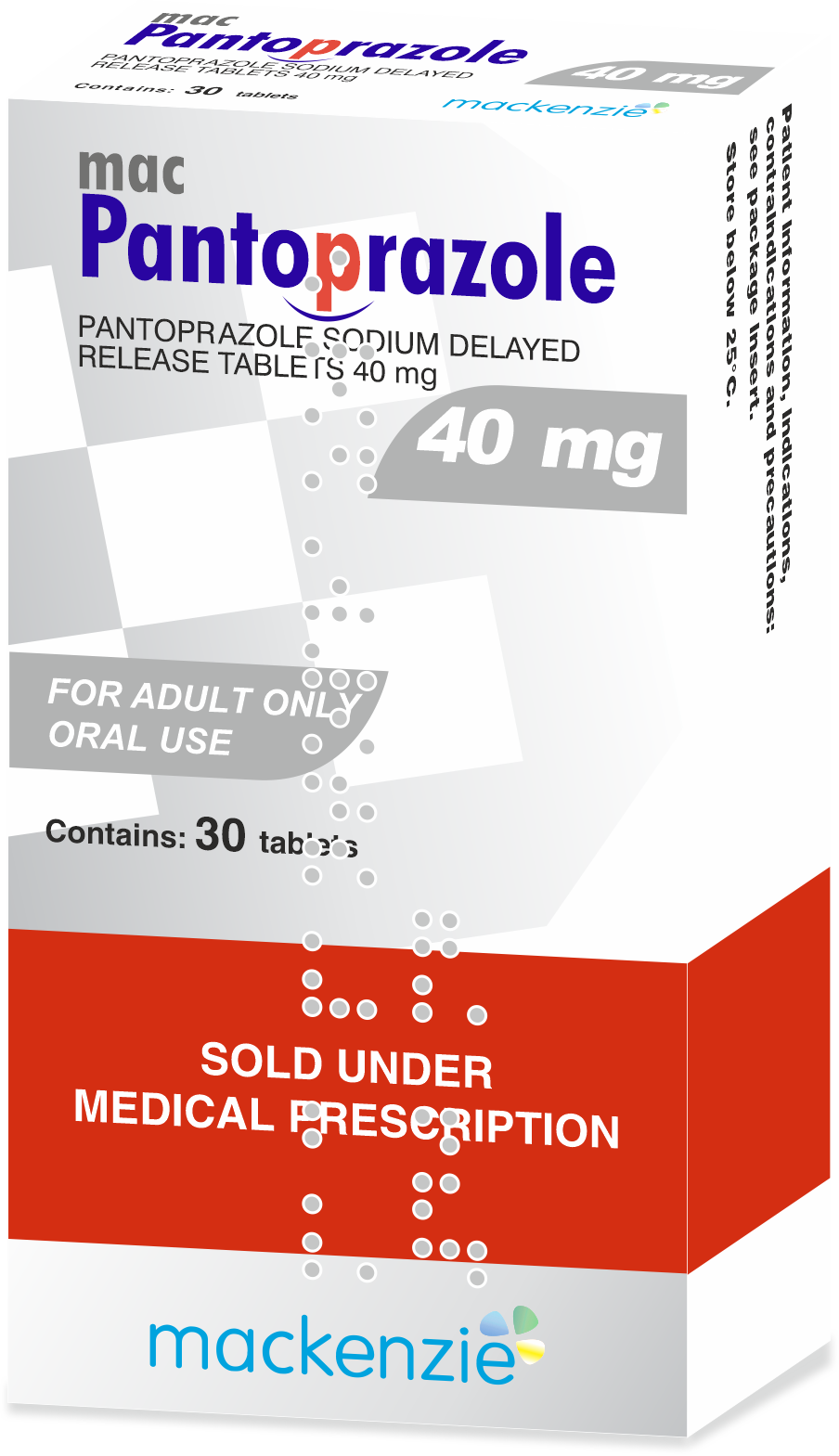
(Pantoprazole Sodium Delayed Release Tablets 40 mg)
COMPOSITION:
Mac Pantoprazole 40 mg
Each film coated delayed release tablet contains:
Pantoprazole sodium sesquihydrate equivalent to
Pantoprazole 40 mg
Colours: Titanium Dioxide and Yellow oxide of Iron
PHARMACOLOGICAL ACTION:
-
Site and mechanism of actionWhite to off-white, round, biconvex, film coated tablets debossed with break line on both sides, separating“11”and“37”on one side and“20”on the other side.
CLINICAL PHARMACOLOGY
-
PharmacodynamicsPantoprazole is a proton pump inhibitor, i.e., it inhibits specifically and dose proportionally H+,K+-ATPase, the enzyme which is responsible for gastric acid secretion in the parietal cells of the stomach.
Pantoprazole is a substituted benzimidazole which accumulates in the acidic compartment of the parietal cells after absorption. In the parietal cell it is protonated and chemically re-arranged to the active inhibitor, a cyclic sulphenamide, which binds to the H+,K+•ATPase, thus inhibiting the proton pump and causing suppression of stimulated and basal gastric acid secretion after single and multiple intravenous and oral pantoprazole dosing. Because pantoprazole acts distal to the receptor level, it can influence gastric acid secretion irrespective of the nature of the stimulus.
Pantoprazole exerts its full effect in a strongly acidic environment (pH < 3) and remains mostly inactive at higher pH values, which explains its selectivity for the acid secreting parietal cells of the stomach. Therefore, the complete pharmacological and therapeutic effect for pantoprazole can only be achieved in the acid-secreting parietal cells. By means of a feedback mechanism this effect is diminished at the same rate as acid secretion is inhibited.
-
Effect on gastric acid secretionThe mean inhibition of pentagastrin stimulated acid output after 40 mg/day is 85% after seven days, 21/2 to 31/2hours after dosing. After stopping the intake of pantoprazole, there is no evidence of rebound hypersecretion and 7 days after taking the last dose, the acid output is normal.
Pantoprazole maintains the physiological pH-rhythm. The values, however, are shifted to higher levels. During the night, periods with pH values approximating placebo have been found. Although pantoprazole has a half-life of approximately 1 hour, the antisecretory effect increases during repeated once daily administration, demonstrating that the duration of action markedly exceeds the serum elimination half-life.
- Pharmacokinetics:
-
Absorption and distributionPantoprazole is unstable in acid and is administered orally in the form of an enteric-coated tablet. Absorption takes place in the small intestine. On average, the maximum serum/plasma concentrations are approximately 2 to 3 micrograms/ml about 21/2 hours after administration of 40 mg pantoprazole daily, as a single or multiple dose in healthy volunteers. The absolute systemic bioavailability of pantoprazole from single and multiple oral doses of pantoprazole is approximately 77%. Following intravenous administration pantoprazole serum/plasma concentrations decline biexponentially. The terminal half-life (t1/2) is about 1 hour. The total serum clearance is approximately 0,1 L/h/kg and the volume of distribution is about 0, 15 L/kg respectively.
The plasma kinetics for pantoprazole after both oral and intravenous administration are linear over the dose range 10-80 mg.
-
Metabolism Pantoprazole is almost exclusively metabolised in the liver. The main metabolite is desmethylpantoprazole which is conjugated with sulphate.
-
EliminationRenal elimination represents the most important route of excretion (approximately 80%) for the metabolites of pantoprazole. The balance is excreted with the faeces. The half-life of the main metabolite is approximately 11/2 hours which is slightly longer than that of pantoprazole.
-
Pharmacokinetic profile in patientsIn subpopulations of subjects suffering from mild to moderately severe liver cirrhosis, the half-life increases from 1 hour to between 7 to 9 hours. The AUG values are increased by a factor of 6 to 8, while the maximum serum concentration increases by a factor of only 11/2 in comparison with healthy subjects.
In patients with renal impairment the half-life of the main metabolite is moderately increased but there is no accumulation at therapeutic doses. The half-life of pantoprazole in patients with renal impairment is comparable to the half-life of pantoprazole in healthy subjects. Pantoprazole is poorly dialysable. A slight increase in AUC and Cmax occurs in elderly volunteers compared with younger people.
-
- INDICATIONS:
Mac Pantoprazole 40 mg is indicated for the short-term treatment of duodenal ulcer, gastric ulcer and reflux esophagitis. If the duodenal ulcer has been demonstrated to be associated with Helicobacter pylori infection, Mac Pantoprazole 40 mg used in combination with appropriate antibiotics may be useful.
- CONTRA-INDICATIONS:
Hypersensitivity to pantoprazole.
Safety in pregnancy and during lactation has not been established.
Safety and efficacy in children have not been established.
Severely impaired liver function. (See under DOSAGE AND DIRECTIONS FOR USE)
- DOSAGE AND DIRECTIONS FOR USE:The recommended once daily dosage of pantoprazole should be taken in the morning. Mac Pantoprazole 40 mg should be swallowed whole with a little water either before or during breakfast.
-
Duodenal ulcerThe recommended oral dosage is 40 mg pantoprazole once daily in the morning for 2 to 4 weeks. If the duodenal ulcer has been demonstrated to be associated with Helicobacter pylori infection, Mac Pantoprazole 40 mg used in combination with appropriate antibiotics may be useful.
-
Gastric ulcerThe recommended oral dosage is 40 mg pantoprazole once daily in the morning for 4 to 8 weeks. In the case of a suspected gastric ulcer, malignancy of the ulcer should be excluded, as treatment could conceal the symptoms and may delay diagnosis.
-
Reflux oesophagitisThe recommended oral dosage is 40 mg pantoprazole once daily in the morning for 4 to 8 weeks.
-
Mild Gastro-esophageal reflux disease (GERD)The recommended oral dosage is 20 mg pantoprazole per day. A 4-week period is usually required for healing of mild GERD. If this is not sufficient, healing will usually be achieved within a further 4 weeks.
-
Long-term management and prevention of relapse in GERDFor long-term management a maintenance dose of one Pantoprazole 20 mg tablet per day is recommended, increasing to 40 mg pantoprazole per day if a relapse occurs. After healing of the relapse, the dosage can be reduced to 20 mg pantoprazole. Experience with long-term administration is limited.
-
Elderly patientsNo dosage adjustment is necessary in the elderly.
-
Impaired renal and liver functionNo dosage adjustment is required in the presence of impaired renal and liver function. A daily dose of 20 mg pantoprazole should not be exceeded in patients with mild to moderate severe hepatic cirrhosis.
-
- SIDE-EFFECTS AND SPECIAL PRECAUTIONS:
-
Side-effectsHeadaches and gastro-intestinal complaints such as upper abdominal pain, diarrhoea, constipation or flatulence have been reported. With continued treatment complaints usually diminish. There have been reports of allergic reactions such as skin rash, pruritus and in isolated cases also urticaria, angioedema or anaphylactic shock.
There have been less frequent reports of nausea, dizziness or disturbances in vision (blurred vision).
Peripheral edema, depression, fever or myalgia have been reported in individual cases.
-
Special precautionsPantoprazole is not indicated for mild gastro-intestinal complaints such as nervous dyspepsia. Prior to treatment, the possibility of a malignant gastric ulcer or a malignant disease of the oesophagus should be excluded, as the treatment with pantoprazole may alleviate the symptoms of malignant ulcers and can thus delay diagnosis.
Diagnosis of reflux oesophagitis should be confirmed by endoscopy.
-
-
KNOWN SYMPTOMS OF OVERDOSAGE AND PARTICULARS OF ITS TREATMENT:There are no known symptoms of overdosage in man. No specific therapeutic recommendation can be made in cases of overdosage.
- IDENTIFICATION:
Mac Pantoprazole 40 mg : Yellow colored, oval shape, biconvex, enteric coated tablets, plain on both sides.
- STORAGE INSTRUCTIONS:
Store below 25°c.
- PRESENTATION:
MAC PANTOR is available as 40 mg tablets in a blister strip of 1 O tablets.